
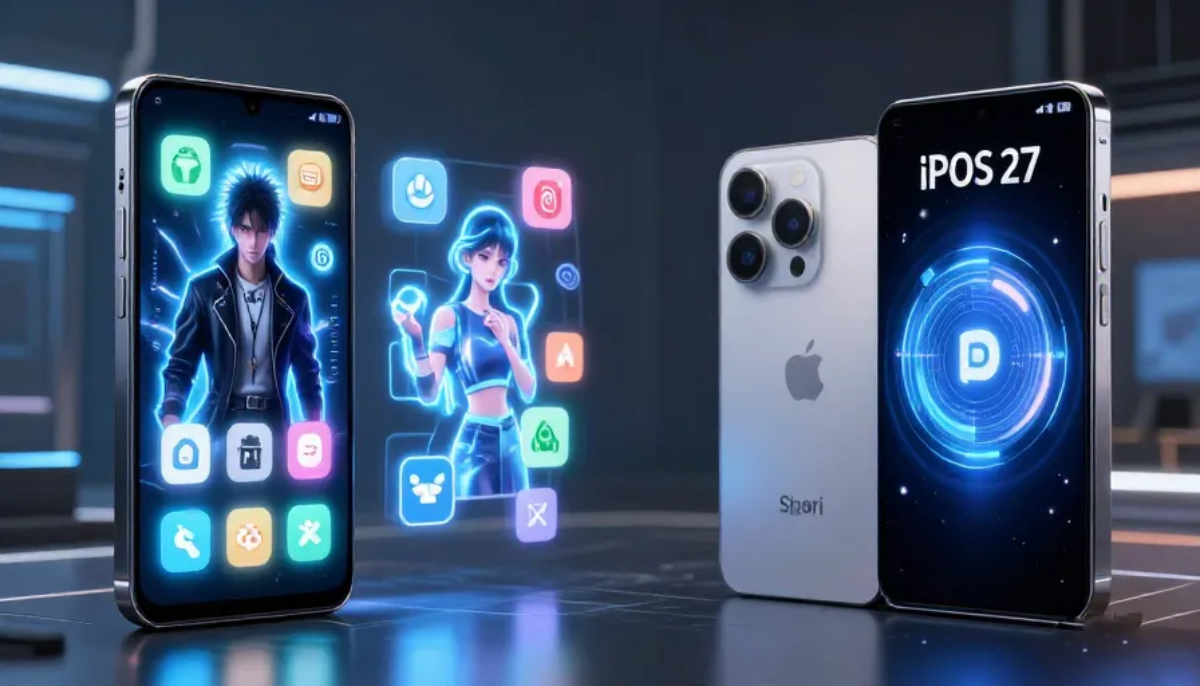
For over a decade, our smartphones have operated on a simple premise: a grid of icons that act as portals to siloed applications. You want food? Open an app. Need to check your marathon countdown? Open a widget. But as we step into the midpoint of 2026, that paradigm is collapsing.
The “Android Show | I/O Edition 2026” recently introduced us to Gemini Intelligence, a system that doesn’t just assist you—it anticipates you. Meanwhile, leaks from Cupertino suggest that Apple’s iOS 27 will finally unveil Siri 2.0, a move that could turn the iPhone from a tool into a teammate.
The Revolution of “Create My Widget” (Android 17)
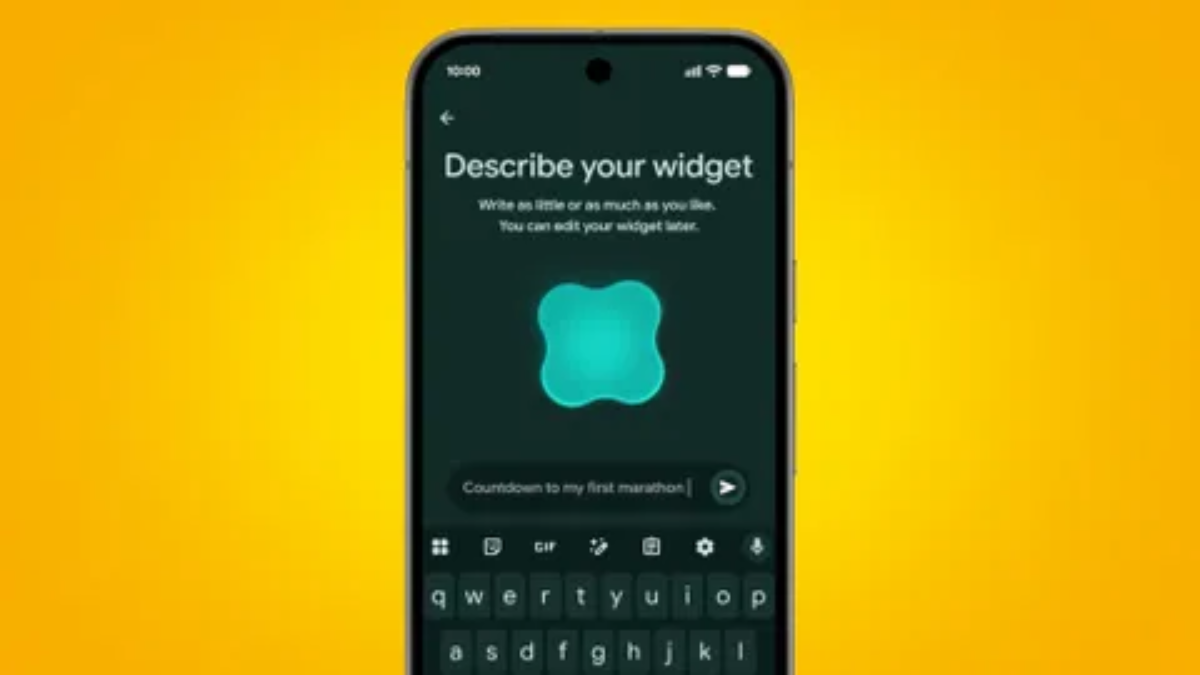
The most talked-about feature of Android 17 is undoubtedly Create My Widget. For the first time, the user interface (UI) is no longer fixed by a designer in Mountain View. It is generated by the user’s intent.
From Static to Generative
In previous versions, a widget was a pre-baked window showing a narrow slice of data (weather, stocks, clock). In Android 17, you simply describe what you need.
-
Example: “Build me a dashboard that tracks my hydration, shows my next meeting location on a map, and gives me a one-sentence summary of my unread Slack messages.”
-
The Result: Gemini Intelligence pulls from your health data, calendar, and messaging apps to construct a functional, resizable UI element on the fly. This is the first true implementation of Generative UI—an interface that builds itself.
Personal Intelligence Integration
Unlike third-party customization apps, Create My Widget has deep system-level access. It uses Personal Intelligence to understand context. If you’re traveling, it might automatically suggest a “Travel Mode” widget that displays your boarding pass, local currency conversion, and the gate number of your connecting flight without you asking.
iOS 27: The Siri 2.0 “Agentic” Awakening
Apple has been uncharacteristically quiet about its AI progress, but the 2026 Worldwide Developers Conference (WWDC) is expected to be a “make-or-break” moment. Reports indicate that iOS 27 is built around a completely rebuilt Siri, potentially powered by a $1 billion annual partnership with Google’s Gemini backend.
On-Screen Awareness
The “killer feature” rumored for iOS 27 is On-Screen Understanding. This allows Siri to “see” what you are looking at. If you are browsing a restaurant’s menu on Safari, you could say, “Book a table for four here next Tuesday,” and Siri will navigate the site, fill in your details, and add it to your calendar.
The Standalone Siri Interface
Leaks suggest Apple is testing a “Siri App” experience—a conversational hub that moves away from the floating orb at the bottom of the screen. This would turn Siri into a full-fledged agent capable of cross-app actions, such as taking a photo you just edited and sending it as an attachment to a specific email thread mentioned in your “Work” folder.
The Hardware War: NPU Power and Agentic Chips
The software of 2026 requires hardware that would have been unthinkable two years ago. To run these “agents” without melting the battery, a new class of silicon has emerged.
Snapdragon 8 Elite Gen 5 vs. Apple A19 Pro
-
Qualcomm: The latest Android flagships (like the Galaxy S26 and Pixel 10) utilize dedicated NPUs (Neural Processing Units) that support INT4 processing, allowing AI tasks to run locally with massive efficiency.
-
Apple: The A19 Pro chip is rumored to feature a massive “Neural Engine” upgrade, specifically designed to handle the Privacy-Preserving On-Device AI that Apple prides itself on.
| Feature | Android 17 (Gemini) | iOS 27 (Siri 2.0) |
| Core AI Philosophy | Cross-app automation & Agentic tasks | Personal context & On-screen awareness |
| Primary Tool | Create My Widget (Generative UI) | Siri 2.0 (Agentic Assistant) |
| Data Privacy | Cloud-Edge Hybrid (Opt-in) | On-Device First / Private Cloud Compute |
| Key Device | Samsung Galaxy S26 / Pixel 10 | iPhone 17 Pro / Pro Max |
Automation: The “PA in Your Pocket”
The ultimate goal of both Android 17 and iOS 27 is Multi-Step Task Automation. This is the leap from a “Smart Assistant” to an “Intelligent System.”
The “Costa Rica” Scenario
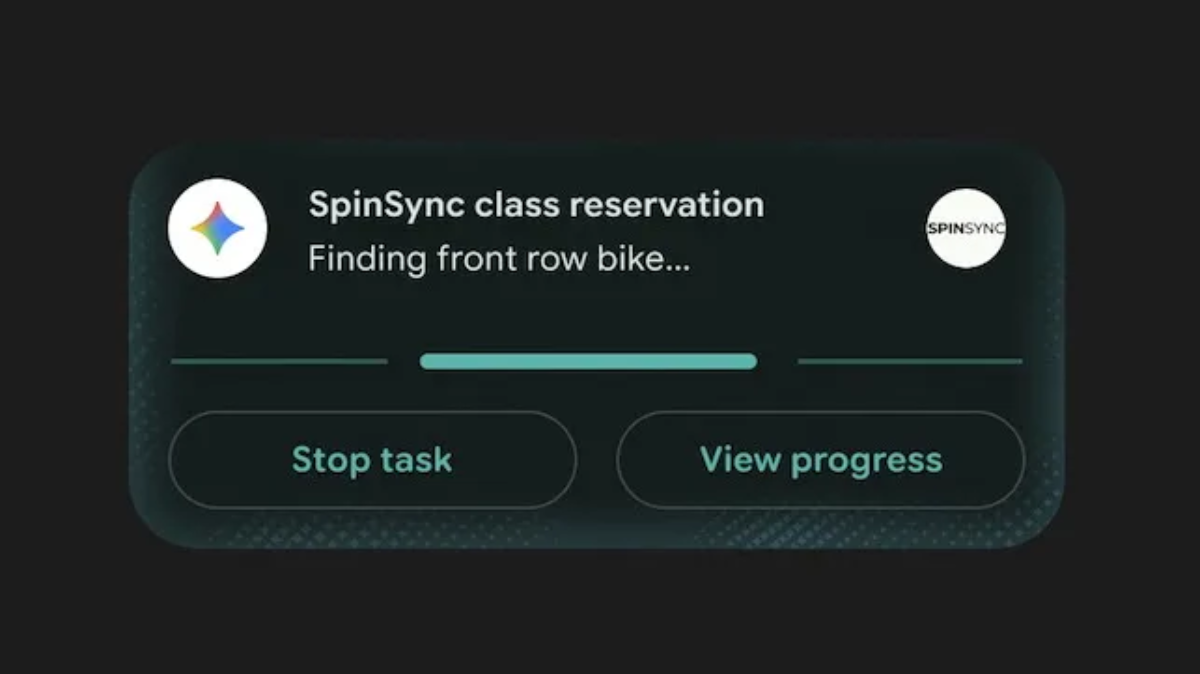
In the Android Show 2026 demo, a user snapped a photo of a travel brochure for a coffee tour. Gemini Intelligence didn’t just identify the photo; it searched for the tour online, checked the user’s flight availability, organized a group of six friends from their contacts, and drafted an invite.
Apple’s response in iOS 27 is expected to be more focused on App Intents. Instead of the AI doing the searching, Siri will command the apps you already love (Expedia, WhatsApp, Calendar) to perform the actions on your behalf, keeping your data within the “walled garden” you trust.
Privacy: The Final Frontier
As these systems gain access to our inboxes, photos, and live screens, the question of privacy has never been more critical.
-
Google’s Approach: Android 17 features “Autofill with Gemini,” which is strictly opt-in. Google emphasizes that “the human is always in the loop,” requiring final confirmation before the AI makes a purchase or sends sensitive data.
-
Apple’s Approach: iOS 27 will likely double down on Private Cloud Compute. If an AI task is too heavy for the iPhone’s chip, it is sent to an encrypted Apple server where the data is processed and instantly deleted, ensuring even Apple cannot see your request.
Conclusion: A Choice of Philosophies
By late 2026, the choice between Android 17 and iOS 27 will be a choice of philosophies.
Do you want a Generative System like Android 17, which lets you build your own interface and automate your life with the full power of Google’s web-scale data? Or do you want an Integrated Agent like iOS 27, which offers a polished, secure, and deeply intuitive experience that understands your personal context better than any other device?
One thing is certain: the era of “just an app for that” is over. The era of the AI Agent has begun.
FAQ About Android 17 and iOS 27 AI Features
1. What is Android 17’s “Create My Widget” feature?
Android 17 introduces a generative AI feature that allows users to create custom widgets using natural language prompts. Instead of fixed layouts, the system dynamically builds personalized dashboards based on user intent.
2. How does Gemini Intelligence work on Android 17?
Gemini uses contextual awareness, app integration, and on-device AI processing to automate tasks, summarize information, and generate adaptive user interfaces.
3. What makes Android 17 different from previous Android versions?
Android 17 shifts from static app-based interaction toward “agentic AI,” where the operating system proactively assists users with automation, contextual suggestions, and intelligent UI generation.
4. What is Siri 2.0 in iOS 27?
Siri 2.0 is expected to be a rebuilt AI assistant for iOS 27 featuring on-screen awareness, cross-app actions, and more advanced conversational abilities.
5. What does “On-Screen Awareness” mean in iOS 27?
It allows Siri to understand and interact with whatever is displayed on the screen, enabling actions like booking reservations, summarizing content, or managing tasks directly from visible apps or websites.
6. Will iOS 27 use Google Gemini AI?
Reports suggest Apple may partner with Google to integrate Gemini backend capabilities into Siri 2.0, though Apple is expected to maintain its own privacy-focused AI framework.
7. What is Generative UI in Android 17?
Generative UI refers to interfaces dynamically created by AI based on user requests instead of being manually designed by developers.
8. Which phones are expected to support Android 17 AI features?
Flagship devices such as the Samsung Galaxy S26 and Google Pixel 10 are expected to fully support advanced Gemini Intelligence features.
9. Which iPhones will support iOS 27 AI tools?
The advanced Siri 2.0 features are expected to debut on the iPhone 17 Pro and iPhone 17 Pro Max.
10. What is an NPU in modern smartphones?
An NPU (Neural Processing Unit) is a specialized chip designed for AI tasks such as language processing, image recognition, and real-time automation while minimizing battery consumption.
11. What is the Snapdragon 8 Elite Gen 5 chip?
Snapdragon 8 Elite Gen 5 is Qualcomm’s advanced mobile processor optimized for on-device AI and generative computing.
12. How does Apple handle AI privacy in iOS 27?
Apple is expected to use “Private Cloud Compute,” which processes complex AI requests on encrypted servers while prioritizing on-device processing whenever possible.
13. What is “Autofill with Gemini” on Android?
It is an AI-powered system that can intelligently fill forms, manage repetitive tasks, and assist with purchases while keeping users in control through confirmation prompts.
14. Can Android 17 automate multi-step tasks?
Yes. Android 17 is designed for agentic automation, allowing Gemini to coordinate multiple apps and actions from a single command.
15. What is the difference between Android 17 AI and iOS 27 AI?
Android 17 focuses on customizable generative systems and deep automation, while iOS 27 emphasizes personal context, seamless integration, and privacy-first AI experiences.
16. Will AI assistants replace traditional apps?
Not entirely, but AI agents are expected to reduce the need for manually opening apps by handling tasks conversationally and contextually.
17. What is “agentic AI” in smartphones?
Agentic AI refers to AI systems capable of independently completing tasks, coordinating apps, and making contextual decisions on behalf of users.
18. Is on-device AI better than cloud AI?
On-device AI offers faster response times and better privacy, while cloud AI provides more computational power for complex tasks.
19. Why is AI integration becoming the future of smartphones?
Modern AI systems improve productivity, automate repetitive actions, personalize interfaces, and reduce friction between users and technology ecosystems.
20. When will Android 17 and iOS 27 officially launch?
Android 17 is expected to roll out gradually following Google I/O 2026 announcements, while iOS 27 is anticipated to debut after Apple’s WWDC 2026 event.