
Google Pixel 10a: Flat Camera Design, 3,000-Nit Display, and a Battery That Beats the Pixel 10
2 weeks ago · Updated 2 weeks ago
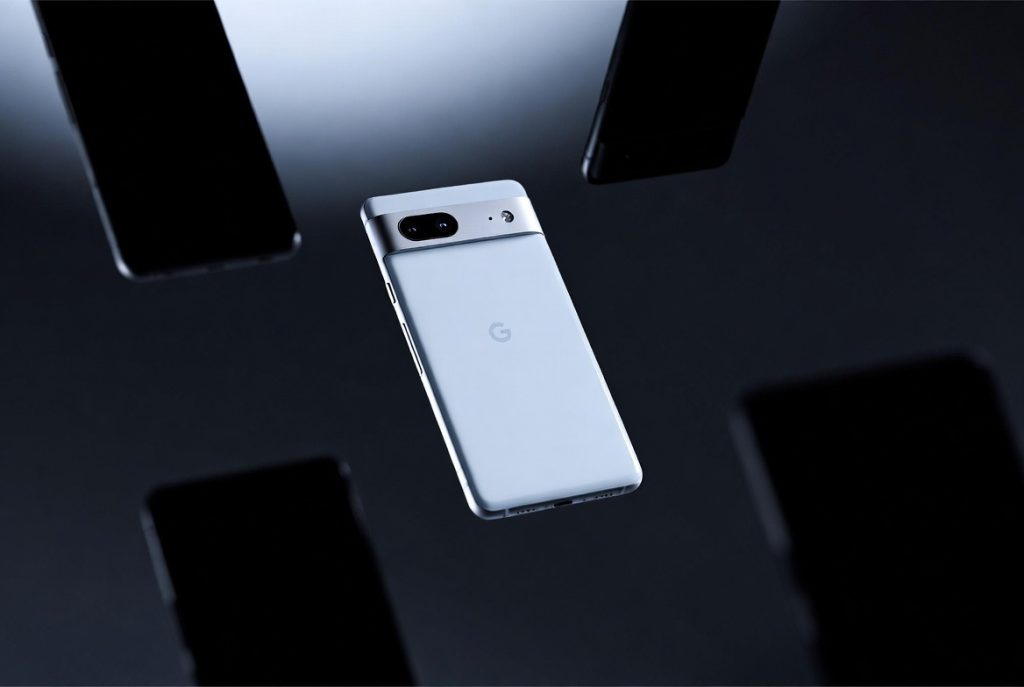
Google rarely does anything by accident, and the surprise launch of the Pixel 10a is no exception. Arriving as an unexpected addition to the Pixel 10 family, the 10a takes Google's established formula — take the flagship Pixel hardware platform, add meaningful upgrades in one or two key areas, price it more accessibly — and applies it with a twist that nobody quite predicted: a completely flat back with no camera bump.
For anyone who has followed the Pixel line since the Pixel 3 era, this is a genuinely surprising design choice. The camera bar — Google's signature horizontal camera housing that has defined the visual identity of the Pixel lineup since the Pixel 6 — is absent from the Pixel 10a's rear. In its place is a smooth, flat back that makes the device look almost like a concept phone, or like a Pixel stripped down to its most minimal possible form.
But the Pixel 10a is not minimal in any other sense. It brings Google's Actua Display technology with a peak brightness of 3,000 nits to the 'a' series for the first time. It runs on the Tensor G4 processor paired with Google's latest Gemini AI capabilities. And its 5,100 mAh battery is not just the largest in any Pixel 'a' series device — it is larger than the battery in the standard Pixel 10 itself, a reversal of the usual hierarchy that has generated significant attention from the Android enthusiast community.
This article examines every significant aspect of the Pixel 10a: what the flat camera design means practically and aesthetically, how the Actua Display's 3,000 nit peak brightness compares to the competition, what Tensor G4 and Gemini AI deliver in real-world use, and why the battery specification is potentially the most consequential upgrade in the device's entire feature set. We also look at the Pixel 10a's market positioning in a competitive Android landscape and consider who this device is designed for.
"The Pixel 10a's 5,100 mAh battery is not just the largest ever in a Pixel 'a' device — it is larger than the Pixel 10 itself. Google has made a clear statement: battery anxiety ends here."
| GOOGLE PIXEL 10a: COMPLETE SPECIFICATIONS AT A GLANCE |
| 📱 Display: 6.3-inch OLED, Actua Display technology, up to 3,000 nits peak brightness |
| 📸 Camera: Rear camera system with flat design — no camera bump (bump-free back) |
| ⚙️ Processor: Google Tensor G4 (co-developed with Samsung) |
| 🤖 AI: Gemini AI integration — latest Google AI features built in |
| 🔋 Battery: 5,100 mAh — larger than Pixel 10 (4,970 mAh) |
| ⚡ Charging: 10W wired charging (same as Pixel 10) |
| 🌐 Market: United States primary market; limited international availability |
| 💰 Positioning: High-end mid-range / affordable flagship segment |
| 🎨 Design: Flat back, no camera bar/bump — significant redesign vs. previous Pixel 'a' series |
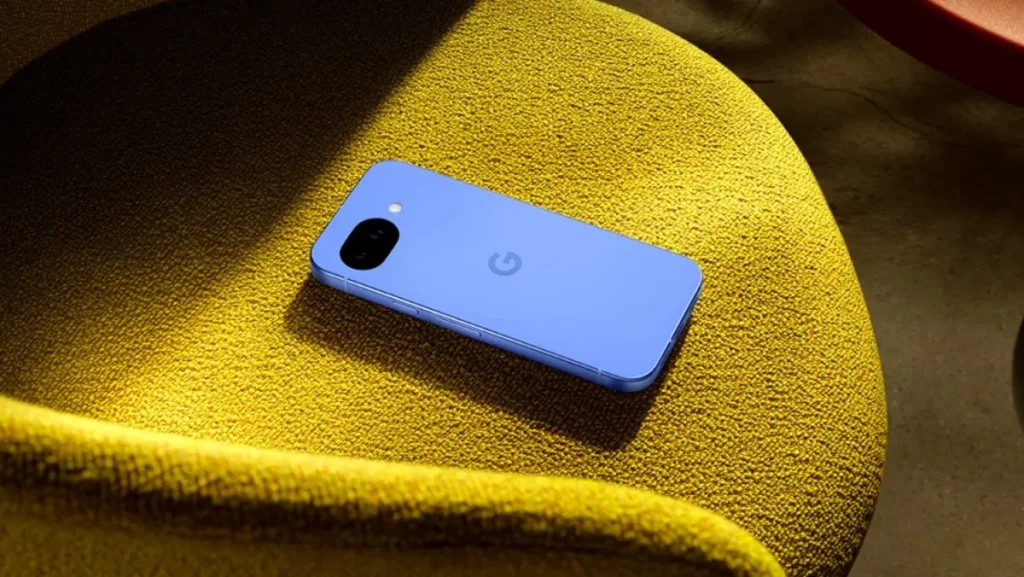
The Flat Camera Design — Breaking the Pixel Mold
Perhaps the single most visually striking aspect of the Pixel 10a is what it does not have: a camera bump. Since Google introduced the horizontal camera bar design with the Pixel 6 in 2021, the protruding camera housing has been one of the most recognizable — and polarizing — design elements in Android smartphones. Love it or hate it, the camera bar was unmistakably Pixel.
The Pixel 10a abandons it entirely. Instead of a raised module or bar, the rear cameras are integrated into a flush, flat back surface. From a distance, the 10a looks almost like a prototype or a phone with no rear camera at all. Up close, the camera lenses sit in carefully machined recesses that keep them level with the back surface, protected from table-top scratches by the surrounding material rather than by elevation above it.
Why Camera Bumps Exist (and Why Eliminating Them Is Hard)
Camera bumps — the raised camera modules that have become ubiquitous on smartphones — exist because of a fundamental conflict between two competing design priorities. On one hand, users and designers want thin, flat phones that are easy to hold, look elegant, and lie flat on surfaces. On the other hand, camera quality depends heavily on the size of the camera sensor and the length of the optical path between the lens and the sensor, both of which push in the direction of making the camera module thicker.
As smartphone cameras have become more sophisticated — adding larger sensors, longer focal lengths for telephoto capability, and complex multi-lens arrays — the thickness of the camera module has generally increased. Since users and reviewers strongly penalize phones for being too thick overall, manufacturers have converged on a compromise: keep the phone body thin, and accept a protruding camera module that adds height locally without increasing the overall body thickness.
Eliminating a camera bump while maintaining camera quality requires either accepting some compromise in optical capability (using smaller sensors or shorter optical paths) or finding engineering solutions that allow capable optics to fit within the phone's body depth. For the Pixel 10a — which Google positions as a high-end device — the challenge is to achieve the flat design without significantly compromising the camera quality that Pixel users expect.
What the Flat Design Means in Practice
The practical implications of a flat-back design extend beyond aesthetics. The most immediate benefit is that the Pixel 10a lies completely flat on any surface — a table, a desk, a nightstand — without rocking or sitting at an angle because of a protruding camera bump. For users who frequently set their phones down screen-up (which is most people), this means a more stable resting position and reduced risk of the phone sliding off uneven surfaces.
The flat design also changes the feel of the device in hand. Camera bumps create an asymmetric grip — the side of the phone with the camera module is thicker than the side without it, which some users find uncomfortable for extended holding. A flat back distributes the device's thickness evenly across the full surface, which generally results in a more comfortable, symmetrical grip.
For case design, the flat back opens up options that camera bumps preclude. Ultra-thin cases, flat folio-style cases, and wallet cases that integrate the phone flatly all become more practical when there is no protruding module to accommodate. The aftermarket case ecosystem for the Pixel 10a will likely offer a wider variety of case profiles than previous Pixel models allowed.
The Design Language Shift
Beyond the functional benefits, the elimination of the camera bar represents a significant statement about Pixel's design direction. The camera bar was specifically designed to be bold and distinctive — a design choice that said 'this is clearly a Pixel' from across a room. Its removal suggests that Google is either pivoting to a more universal, less brand-specific design language, or that it is creating a visual hierarchy where the standard Pixel models retain the distinctive camera bar while the 'a' series adopts a cleaner, more minimal aesthetic.
Reactions from the tech community and general users have been broadly positive. The flat design reads as fresh and modern, and several technology reviewers have described the Pixel 10a as looking more premium than its price point would suggest — which is arguably the ideal outcome for a mid-range device competing against phones at higher price points.
Section 2: The Actua Display — 3,000 Nits and What It Means
The display is where the Pixel 10a most directly competes with flagships at higher price points. By bringing Actua Display technology to the 'a' series for the first time, Google has given the 10a a screen specification that was previously reserved for its more expensive models — and 3,000 nits of peak brightness is a number that demands attention.
Understanding Display Brightness: Why Nits Matter
Display brightness is measured in nits (the formal unit is candela per square meter, abbreviated cd/m²). A standard office monitor typically operates at 250-350 nits. Early smartphone displays ran at similar levels. The push to ever-higher brightness levels in smartphone displays is driven by one primary use case: outdoor visibility in direct sunlight.
In bright outdoor conditions — a sunny day at the beach, an outdoor sports event, walking down a street in full afternoon sunshine — the ambient light level can reach 10,000 to 100,000 lux. A display that outputs only 500 nits of brightness is effectively invisible in these conditions: the ambient light washing the screen out is orders of magnitude brighter than the display itself. The result is a screen that looks completely washed out and unreadable, no matter how the user tilts or shields the device.
Higher peak brightness directly addresses this problem. A display that can reach 1,500 nits is usable in most outdoor conditions. A display at 2,000 nits is comfortable even in direct sunlight. At 3,000 nits, the Pixel 10a's display delivers enough output to remain fully readable in virtually any real-world lighting condition — including the most challenging scenarios like a bright sunny day with the sun directly behind you reflecting off the screen.
Actua Display Technology Explained
The 'Actua Display' branding that Google applies to the Pixel 10a's screen refers to a specific set of technologies and calibrations that go beyond raw brightness. The Actua Display specification encompasses the OLED panel type (which delivers perfect blacks, excellent contrast ratios, and vibrant colors), the peak brightness capability, the color accuracy calibration (Google applies extensive color science to its Pixel displays for accurate, natural color rendering), and the adaptive brightness system that intelligently adjusts the display's output based on ambient lighting conditions.
The adaptive brightness component is particularly important for battery efficiency. Running a display at 3,000 nits continuously would drain the battery extraordinarily quickly — that level of brightness is reserved for high ambient light conditions where it is genuinely needed. In typical indoor use, the display runs at far lower brightness levels, and the adaptive system is sophisticated enough to make these adjustments smoothly and predictably. The result is a display that can hit 3,000 nits when the environment demands it, but that operates efficiently throughout normal daily use.
The 6.3-Inch Size: Compact by Modern Standards
The Pixel 10a maintains the same 6.3-inch display size as the Pixel 9a. In the context of the current Android landscape — where many flagship devices have pushed to 6.7, 6.8, or even 6.9 inches — 6.3 inches is notably compact. This is not a bug; it is a feature for a specific segment of users.
A significant proportion of smartphone users — particularly those with smaller hands, those who use their phones one-handed, or those who carry their phones in pockets rather than bags — actively prefer a more compact form factor. The 6.3-inch Pixel 10a is considerably easier to use one-handed than a 6.8-inch device, reaches most of the screen surface without shifting the device in the hand, and fits comfortably in a jeans pocket. For users who have been frustrated by the industry-wide drift toward ever-larger phones, the Pixel 10a's maintained compact size is a genuine selling point.
The 6.3-inch OLED with 3,000 nit peak brightness and Google's color calibration also makes the Pixel 10a an excellent media consumption device at its size. While it will not match the sheer screen real estate of larger devices for movie watching, it delivers outstanding image quality per inch — and for many users, quality per inch matters more than total inches.
| Specification | Pixel 10a | Pixel 10 | Previous Pixel 9a |
| Display size | 6.3 inches | 6.3 inches | 6.1 inches |
| Display type | OLED (Actua) | OLED (Actua) | OLED |
| Peak brightness | 3,000 nits | 3,000 nits | 2,700 nits |
| Refresh rate | 120Hz (adaptive) | 120Hz (adaptive) | 120Hz |
| Camera bump | None (flat) | Camera bar | Camera bar |
| Battery | 5,100 mAh | 4,970 mAh | 4,500 mAh |
| Processor | Tensor G4 | Tensor G5 | Tensor G4 |
| Charging speed | 10W | 23W | 18W |
Section 3: Tensor G4 and Gemini AI — Intelligence at the Core
The Pixel 10a is powered by the same Tensor G4 processor that powered the Pixel 9a — which may seem like a step behind the Pixel 10, which uses the newer Tensor G5. But the Tensor G4 is a capable chip, and its specific strengths align closely with what makes a Pixel device distinctive.
What Is Tensor G4?
The Google Tensor series of processors represents Google's in-house silicon development effort, conducted in partnership with Samsung. Unlike the Qualcomm Snapdragon chips used in most premium Android devices, Tensor processors are specifically designed around Google's priorities: on-device AI processing, natural language understanding, speech recognition, and camera computational photography. The architecture is optimized for these workloads in ways that general-purpose processors — which must balance performance across a wide range of tasks — typically are not.
The Tensor G4 brings meaningful improvements over its predecessors in the areas that Pixel users care about most. On-device speech recognition is faster and more accurate, enabling real-time transcription and translation at quality levels that require cloud processing on most competing devices. Camera processing — particularly for computational photography tasks like Night Sight, face unblur, and portrait mode — benefits from the G4's dedicated imaging neural network accelerators. And Gemini AI features that run on-device rather than requiring a network connection are made possible by the G4's enhanced on-device machine learning capabilities.
The Tensor G5 vs G4 Question
The use of Tensor G4 rather than the G5 in the Pixel 10a will inevitably draw comparisons, and it is worth addressing directly. In the 'a' series context, using a one-generation-old chip is a consistent Google strategy that helps manage the manufacturing cost that allows the 'a' device to be priced lower than the standard Pixel. The Tensor G4 was a strong chip in its own right when it launched, and the year-old silicon is still competitive with many processors in the mid-range segment.
For the specific tasks that define the Pixel experience — AI-powered camera processing, on-device speech recognition, Gemini AI assistant features — the G4 is more than capable. Users who are choosing between a Pixel 10a and a Pixel 10 specifically for the purpose of running demanding general-purpose applications or games at the highest possible frame rates may prefer the G5. Users whose primary interest is Google's AI features, camera capabilities, and overall Pixel software experience will find the G4 fully adequate.
Gemini AI: The Software Advantage
The Tensor G4's greatest asset is what it enables on the software side: Google's Gemini AI integration. Gemini is Google's flagship AI model family, and its integration into Pixel devices goes considerably deeper than the AI assistant features available on other Android phones. The combination of Tensor hardware optimized for on-device AI and Gemini's sophisticated capabilities produces a user experience that is genuinely differentiated from what non-Pixel Android devices offer.
Gemini integration on the Pixel 10a manifests across the entire system: in the camera, where AI-powered scene understanding enables features like Magic Eraser (removing unwanted objects from photos), Best Take (combining the best expressions from multiple shots of a group), and Photo Unblur (recovering sharpness from slightly blurry images); in the system assistant, where Gemini enables natural language queries about things on screen, document summarization, and real-time translation; and in communication apps, where call screening, spam detection, and live transcription run on-device for privacy and speed.
For users who have used Pixel devices before, Gemini AI represents the maturation of features that have been in development for several generations. The integration is increasingly seamless — less a separate AI assistant you invoke and more an intelligent layer that enhances everything the phone does.
On-Device vs. Cloud AI: Why It Matters
One of the most important distinctions in modern AI-powered smartphone features is whether the AI processing happens on the device or in the cloud. Cloud AI processing offers access to larger, more capable models than can run locally, but requires an internet connection and sends user data to remote servers. On-device AI processing works without a network connection, is faster (no round-trip latency to a server), and keeps sensitive data — conversations, photos, documents — on the device rather than transmitting it to the cloud.
Tensor G4's architecture enables a broader range of Gemini features to run on-device compared to what was possible on previous Pixel processors. Real-time speech recognition, live translation, and some camera AI features all benefit from on-device processing that works without a network connection and responds faster than cloud-based equivalents. This is a genuine quality-of-life advantage for users in areas with intermittent connectivity, and a privacy advantage for anyone who is cautious about what data they share with cloud servers.
Section 4: The 5,100 mAh Battery — Google's Biggest Pixel Battery Story
The specification that has generated the most discussion among Android enthusiasts since the Pixel 10a's announcement is its battery capacity: 5,100 mAh. This number is significant for two reasons. First, it is the largest battery ever placed in a Pixel 'a' series device — significantly larger than the 4,500 mAh in the Pixel 9a. Second, and more surprisingly, it is larger than the 4,970 mAh battery in the standard Pixel 10 — making the Pixel 10a the Pixel with the biggest battery in the current lineup.
The Battery Hierarchy Reversal
In virtually every smartphone lineup, the less expensive variant has a smaller battery than the more expensive flagship. This pattern exists because battery capacity is a meaningful cost, larger batteries make phones heavier and thicker, and flagship devices typically command the premium battery specification. The Pixel 10a breaking this pattern is remarkable — and it says something specific about Google's priorities for the 'a' series.
Google's communications around the Pixel 10a have specifically emphasized the battery as a key differentiator. This suggests that battery size is being used strategically: while the 10a may accept some trade-offs compared to the Pixel 10 in areas like processor generation and charging speed, the battery is where Google wanted the 10a to win outright. For many everyday users, battery life is the single most important practical specification in a smartphone — it determines whether the phone makes it through a full day, whether it needs to be charged at lunch, and whether the user experiences the anxiety of watching a low battery indicator.
What 5,100 mAh Means in Real-World Use
Battery capacity numbers are useful for comparison but only tell part of the story. What matters in practice is how many hours of real-world use a given capacity delivers, which depends on the efficiency of the processor, the brightness and refresh rate of the display, the demands of the software running on the device, and the user's specific usage patterns. A 5,100 mAh battery in a device with an inefficient processor might deliver similar real-world battery life to a 4,000 mAh battery in a device with a more efficient chip.
The Tensor G4's efficiency characteristics, combined with 5,100 mAh of capacity and Google's software optimization (Pixel devices benefit from deep hardware-software integration that Android devices using third-party processors do not always achieve), should deliver battery life that comfortably exceeds a full day of typical use for most users. For heavy users — those who spend significant time on the phone for navigation, video streaming, photography, and communication — the extra capacity provides meaningful additional margin before the need to charge.
The 5,100 mAh also gives Google room to deliver strong battery life even with the 3,000-nit capable Actua Display. High-brightness displays are power-intensive; a smaller battery might limit how long the display can sustain peak brightness operation. With 5,100 mAh in reserve, the Pixel 10a can deliver high-brightness outdoor performance without sacrificing overall battery endurance.
The 10W Charging Limitation
The one genuinely disappointing specification in the Pixel 10a's battery story is its charging speed: 10W. Both the Pixel 10a and the standard Pixel 10 charge at 10W, which is a figure that has fallen significantly behind the Android market's current standards. Leading Android flagships from Samsung, OnePlus, Xiaomi, and others now charge at 45W to 120W — speeds at which a phone can go from flat to full in 30 to 60 minutes.
At 10W, the Pixel 10a's 5,100 mAh battery will take approximately two to three hours for a full charge from empty. This is slow by any contemporary standard, and it means that the Pixel 10a requires thoughtful charging habits to get the most from its capacity: plugging in overnight or for extended periods rather than relying on quick top-ups throughout the day.
Google's slow charging speed is a deliberate choice, at least in part. The company has historically justified its conservative charging speeds with battery longevity arguments — slower charging rates generate less heat and put less stress on battery cells, which can translate to better battery health over the device's lifetime. There is genuine scientific basis for this argument: high-speed charging does generate more heat, which is one of the primary causes of long-term lithium-ion battery degradation. Whether this trade-off is the right one for most users — who may upgrade their phones every two or three years and care more about current charging convenience than long-term battery health — is debatable.
Wireless charging support on the Pixel 10a provides an alternative for users who prefer to charge without cables. While wireless charging speeds are typically comparable to or slower than 10W wired charging, the convenience of simply placing the phone on a charging pad makes it a genuinely useful feature for users who adopt the habit of charging whenever the phone is set down.
Section 5: Google Pixel in the Global Market — The US-First Strategy
Understanding the Pixel 10a requires understanding the market context in which Google sells it. Unlike Samsung, Apple, or Xiaomi — which pursue global distribution across hundreds of markets — Google has maintained a deliberately limited market strategy for the Pixel lineup. The primary focus is the United States, with selected markets in Western Europe, Japan, and Australia receiving official distribution.
Why Pixel Is Absent from Most Asian Markets
Markets like Indonesia, where much of the Pixel commentary on platforms like Nesabamedia originates, do not have official Google Pixel distribution. This is not an accident of logistics or oversight — it reflects deliberate strategic choices about where Google can effectively compete, where the regulatory and certification environment allows Pixel's full feature set to operate, and where the market dynamics support the premium pricing that Google's hardware strategy requires.
Google's AI features — including Gemini integration, call screening, live transcription, and many of the camera AI capabilities — are often US-centric in their initial release, with international language support added over time. Launching in markets where the most compelling features of the device would not be fully functional at launch creates a poor product experience and complicates support.
There are also commercial considerations: competing in mature, highly competitive smartphone markets like Indonesia against established local and Chinese brands at premium price points requires significant local investment in marketing, distribution, and after-sales support. Google has consistently chosen not to make that investment in most Asian markets, preferring instead to focus resources on markets where the Pixel brand has established traction.
The Grey Market and Import Channels
Despite the absence of official Google Pixel distribution in many Asian markets, Pixel devices including the 10a will reach consumers in those markets through grey market imports and specialist electronics retailers. For consumers in Indonesia and similar markets who want a Pixel 10a, the practical path is typically through import channels, with the understanding that warranty support will be limited and some carrier-dependent features may not function optimally.
The grey market for Pixel devices in Asia is substantial enough that it supports a small ecosystem of retailers, repair shops, and online communities around the device. For technically informed buyers who understand the limitations of grey market imports and are primarily interested in the hardware and software experience, the absence of official distribution is an inconvenience rather than an absolute barrier.
Section 6: The Competitive Landscape — Where Pixel 10a Fits
The Pixel 10a enters a mid-range and affordable flagship segment that is arguably the most competitive in the entire Android market. Samsung's Galaxy A series, Xiaomi's Redmi and POCO lines, OnePlus's nord lineup, and Google's own previous Pixel 'a' devices all compete for users who want flagship-adjacent features at accessible prices.
Against Samsung Galaxy A55 and A56
Samsung's Galaxy A series is the most direct comparison for the Pixel 10a in terms of market positioning. The Galaxy A55 and its successor offer Samsung's proven hardware at price points that compete with the Pixel 'a' series. Samsung's advantages are extensive carrier distribution, wide international availability, and the Galaxy ecosystem's broad accessory and software support. The Pixel 10a's advantages are Google's deeper AI integration, the flat camera design (which Samsung has not adopted in this segment), the 5,100 mAh battery, and the 3,000 nit display — specifications that at least match and in some cases exceed what Samsung offers at comparable prices.
Against Xiaomi and POCO
Chinese manufacturers led by Xiaomi, POCO, and Realme have redefined value expectations in the Android mid-range. Devices in this segment frequently offer higher raw specifications — faster charging speeds, more cameras, higher refresh rates — at lower prices than Google's Pixel 'a' series. The Pixel 10a's differentiation against these competitors is less about hardware specifications and more about the software experience: Google's AI features, guaranteed OS updates (Google promises seven years of updates for Pixel devices), and the cleaner, more integrated Android experience that Pixel provides.
For users in markets where both Pixel and Xiaomi/POCO are available and who prioritize battery life and display quality, the Pixel 10a's combination of 5,100 mAh and 3,000 nit Actua Display is competitive with what this segment offers. For users who prioritize charging speed or camera system breadth (multiple cameras at varying focal lengths), Chinese competitors may offer more at similar prices.
The Pixel 10a vs. Pixel 10: Should You Spend More?
For consumers considering whether to step up from the Pixel 10a to the standard Pixel 10, the key trade-offs are now more complex than in previous generations, precisely because the 10a has a larger battery. The Pixel 10 offers the newer Tensor G5 processor (with additional AI capability improvements), faster 23W charging, and the camera system associated with the full Pixel 10 series. The Pixel 10a offers a larger battery, the flat camera design, and a lower price.
For users who spend the majority of their time on device-intensive AI features and want the absolute best camera computational photography performance, the Tensor G5 in the Pixel 10 may justify the price premium. For users who prioritize all-day battery life above all else — and who are willing to accept slower charging in exchange for a device that simply goes longer between charges — the Pixel 10a's battery advantage is a genuine reason to prefer it over the more expensive device.
| Factor | Pixel 10a Wins | Pixel 10 Wins |
| Battery capacity | 5,100 mAh | — |
| Charging speed | — | 23W (vs 10W) |
| Processor | — | Tensor G5 (vs G4) |
| Design | Flat back (no bump) | Camera bar design |
| Price | More affordable | — |
| AI capability | Gemini (on G4) | Gemini (on G5, more capable) |
| Updates | 7 years guaranteed | 7 years guaranteed |
Section 7: The Camera System — Flat But Still Capable?
The camera system of the Pixel 10a is one of the areas where speculation has been most active since the device's announcement, precisely because the flat camera design raises questions. If Google has reduced the camera module thickness to the point where it sits flush with the phone's back, has it compromised the sensor size or optical capability in the process?
The Camera Specification Uncertainty
At the time of publication, detailed camera sensor specifications for the Pixel 10a have not been fully disclosed. What is known is the design — the flat back with flush cameras — and the general camera system structure. The specific sensor size, aperture values, and the presence or absence of specific computational photography features will be clearer when full technical reviews of production hardware become available.
Google's computational photography tradition is the strongest asset the Pixel camera system brings to any device, regardless of the specific hardware. From the original Pixel's HDR+ algorithm to Night Sight, Portrait Mode, Magic Eraser, Photo Unblur, and the current generation of Gemini-powered photo editing features, Google has consistently demonstrated that software and AI processing can produce camera results that exceed what the hardware specifications alone would predict. A Pixel 10a with modest hardware running Google's computational photography stack will produce better real-world photos in many conditions than devices with larger sensors running less sophisticated processing pipelines.
Computational Photography: Google's Core Advantage
The heart of Google's camera advantage is not the hardware — it is the algorithm. Google's research teams have spent years developing computational photography techniques that use multiple frames, machine learning models, and deep understanding of image physics to produce output that goes beyond what traditional photography can achieve.
Night Sight, Google's low-light photography mode, uses long exposure multi-frame capture and AI denoising to produce bright, detailed images in conditions where most smartphones produce dark, noisy results. The algorithm is so effective that Night Sight images on a Pixel often look like they were taken in more light than was actually present — not because Google is artificially brightening, but because the algorithm is genuinely reconstructing detail from photons that other camera systems discard.
Magic Eraser identifies and removes unwanted objects from photos — tourists in the background of a landscape shot, power lines cutting through a skyline — using AI inpainting that fills in the removed area with contextually appropriate content. The feature does not work perfectly in every case, but when it does, it produces results that would require significant manual effort in professional editing software.
Photo Unblur attempts to recover sharpness from slightly blurry images by using AI to estimate the blur pattern and reverse it. The feature has improved significantly with each Tensor generation, and on Tensor G4 it can produce usable results from images that would otherwise be lost.
Section 8: Software, Updates, and the Seven-Year Promise
One of Google's most significant differentiators from most Android competitors is its software support commitment. Google guarantees seven years of operating system updates and security patches for Pixel devices — a commitment that no other major Android manufacturer comes close to matching. For a device purchased at any price point, seven years of continued software updates means that the Pixel 10a you buy today will receive the latest Android features and security patches until 2031 or 2032.
Why Long-Term Software Support Matters
The practical implications of seven-year software support are substantial. Security patches close vulnerabilities that are discovered in Android over time — without continued security updates, older devices become increasingly exposed to newly discovered exploits. Seven years of security patches means the Pixel 10a remains a secure device for the full expected lifetime of the hardware, rather than becoming a security liability after two or three years.
OS updates bring new features, performance improvements, and compatibility with new apps and services. A device that remains on an outdated Android version loses access to new Google features, may become incompatible with new app versions, and misses the performance optimizations that each Android release brings. With seven years of updates, the Pixel 10a will receive every significant Android feature and improvement through the end of its support period.
From an environmental and economic perspective, seven-year software support significantly extends the viable lifespan of the device. A phone that remains functional, secure, and feature-current for seven years has dramatically lower environmental impact than a device that is replaced every two to three years because it has fallen off the update schedule. It also represents better long-term value for the user — the cost per year of ownership over a seven-year period is considerably lower than it appears when the purchase price is amortized over that timeframe.
The Pixel Software Experience
Beyond the update commitment, Pixel devices benefit from Google's specific version of Android — which differs meaningfully from what other Android manufacturers deliver. The Pixel software experience is characterized by clean, uncluttered UI design without the overlays, bloatware, and customization layers that many Android manufacturers apply; first access to new Android features and Google app updates that roll out to Pixel before other devices; deep integration between Google's services and the OS that enables features like on-device speech recognition, Now Playing (which identifies music playing in the background without any user interaction), and real-time call screening; and performance optimization that comes from hardware and software being developed by the same company.
For users coming from heavily skinned Android devices — Samsung's One UI, Xiaomi's MIUI, or others — the transition to Pixel's clean Android experience is often striking. The reduced complexity, faster performance, and more predictable behavior of stock Android combined with Google's intelligent features creates a device that feels both simpler and more capable simultaneously.
Section 9: Who Should Buy the Pixel 10a?
Based on the full picture of the Pixel 10a's specifications, design choices, and market positioning, it is worth being specific about who this device is best suited for — and who might be better served by alternatives.
The Ideal Pixel 10a Buyer
The Pixel 10a is designed for users who prioritize an intelligent software experience over raw hardware benchmarks. If what you want from a smartphone is the best possible integration of AI features into your daily use — voice recognition that works without internet access, a camera that makes every photo the best possible version of itself, an assistant that understands context and natural language, and software that consistently gets smarter over time — the Pixel 10a delivers this better than any Android device at its price point.
Users who have struggled with battery anxiety on previous smartphones — the chronic checking of the battery percentage, the lunch-hour charge sessions, the power bank in the bag — will find the 5,100 mAh battery a genuinely transformative upgrade. Combined with Google's power efficiency optimizations, the 10a should comfortably last through the longest days without requiring a mid-day charge.
Outdoor enthusiasts, commuters who spend significant time outside, and anyone who has found their phone screen difficult to read in bright daylight will appreciate the 3,000 nit Actua Display. At that brightness level, the screen remains fully readable even in the most challenging outdoor conditions — a practical benefit that translates directly to usability rather than just a number on a spec sheet.
Users who care about long-term device value and environmental impact will be drawn to the seven-year update guarantee. At the Pixel 10a's price point, buying a device that remains current and secure for seven years represents substantially better value than buying a cheaper device that falls off the update schedule after two to three years.
Where the Pixel 10a Falls Short
The Pixel 10a is not the right device for users who need fast charging. At 10W, it is the slowest-charging mainstream flagship available, and if your lifestyle requires topping up your phone quickly during short breaks in your day, the charging speed will be a source of genuine frustration regardless of how capable everything else is.
Users who want the absolute best camera hardware should consider the standard Pixel 10 or the Pixel 10 Pro. Google's computational photography is excellent across the Pixel lineup, but the 10 and 10 Pro receive camera hardware upgrades that translate into measurably better performance in specific situations, particularly for telephoto photography and video.
And of course, for users outside of Google's supported markets — including most of Southeast Asia, South Asia, Latin America, Africa, and the Middle East — the practical path to ownership involves grey market imports with the associated limitations. For users in these regions who want official warranty support and full feature availability, the Pixel 10a may not be the most practical choice despite its impressive specifications.
| PIXEL 10a VERDICT: WHO IT IS FOR |
| ✅ Best for: Users who prioritize AI features, battery life, and long-term software support |
| ✅ Best for: Outdoor users who need a screen readable in direct sunlight (3,000 nits) |
| ✅ Best for: Users who want the cleanest Android experience with guaranteed 7-year updates |
| ✅ Best for: Users who prefer a compact (6.3-inch) phone with a clean flat design |
| ⚠️ Consider alternatives if: You need fast charging (10W is very slow by current standards) |
| ⚠️ Consider alternatives if: You want the newest Google AI processing (Tensor G5 is in Pixel 10) |
| ⚠️ Consider alternatives if: You are outside Google's supported markets and need official warranty |
| ⚠️ Consider alternatives if: Maximum camera hardware is your top priority |
Conclusion: A Pixel That Plays by Its Own Rules
The Google Pixel 10a is a device that refuses to follow the conventional mid-range smartphone playbook. It has a flat camera back when the industry standard is protruding modules. It has a larger battery than its more expensive sibling. It brings 3,000 nit display technology to a price point where competitors offer significantly dimmer screens. And it does all of this with Google's most mature AI platform yet, backed by a seven-year software support commitment that no comparable Android device can match.
Are there compromises? Certainly. The 10W charging speed is the most significant, and users who have become accustomed to the fast charging available on many competing devices will find it a noticeable step back. The use of Tensor G4 rather than G5 means the 10a is not leading in raw AI processing capability. And for users outside of Google's supported markets, accessing the device and its full feature set requires extra effort.
But in the specific areas where Google has chosen to invest — battery capacity, display brightness, design innovation, and AI software integration — the Pixel 10a is genuinely impressive. The 5,100 mAh battery is a bold choice that puts user experience ahead of the usual hierarchy of flagship specifications. The flat camera design is a striking visual statement that has clearly resonated with users and reviewers. And the combination of Actua Display and Gemini AI on Tensor G4 delivers a software experience that remains uniquely Pixel.
For users in Google's supported markets who are looking for an Android device that prioritizes intelligent daily use, all-day battery life, and long-term value over sheer specification maximalism, the Pixel 10a makes a compelling case for itself. It is a device that knows what it wants to be — and is very good at being exactly that.
FAQ – Google Pixel 10a
1. What is the Google Pixel 10a?
The Google Pixel 10a is an upcoming mid-range smartphone expected to continue Google’s focus on clean Android experience, strong camera performance, and AI-powered features.
2. What makes the Pixel 10a design unique?
One of the rumored highlights is its flat back design without a prominent camera bump, giving it a cleaner and more minimalist look compared to previous Pixel models.
3. What chipset will the Pixel 10a use?
It is expected to feature a new-generation Google Tensor chipset, designed to improve AI processing, efficiency, and overall performance.
4. How good is the camera on the Pixel 10a?
Pixel devices are known for excellent computational photography, so the Pixel 10a is expected to deliver high-quality photos, especially in low-light conditions.
5. Will the Pixel 10a support AI features?
Yes, it will likely include advanced AI features such as real-time translation, smart photo editing, and voice assistance powered by Google’s ecosystem.
6. Is the Pixel 10a good for gaming?
While not a dedicated gaming phone, it should handle most games smoothly thanks to optimized software and an improved chipset.
7. What display can we expect?
The Pixel 10a is expected to feature an OLED display with a smooth refresh rate and vibrant color accuracy.
8. Will it support 5G connectivity?
Yes, like previous Pixel A-series phones, the Pixel 10a is expected to fully support 5G networks.
9. When will the Pixel 10a be released?
Google typically launches A-series phones annually, so the Pixel 10a is expected to be released around mid-year, although no official date is confirmed yet.
10. Is the Pixel 10a worth buying?
If you want a clean Android experience, strong camera performance, and reliable updates at a mid-range price, the Pixel 10a could be a great option.
Leave a Reply