
The Ambient Intelligence Pivot: A Deep-Dive Review of the Google Home Speaker (2026)
6 days ago
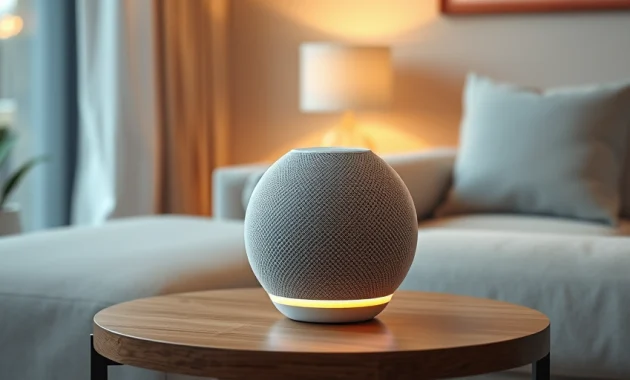
The smart home market has spent the last half-decade in a state of architectural stagnation. Since the release of the Nest Audio in 2020 and Apple’s HomePod iterations, the "smart speaker" has remained largely unchanged: a basic speaker wrapped in fabric, executing rigid, pre-programmed commands through cloud-based voice engines.
The Google Home Speaker (2026) breaks this pattern. Dropping the "Nest" moniker and returning to its original brand roots, this $99.99 device shifts smart home technology away from simple command-and-response triggers toward true ambient intelligence.
By replacing the traditional, deterministic Google Assistant with the company's heuristic Gemini for Home large language model (LLM), Google has transformed the smart speaker from a basic controller into an adaptable companion.
This deep-dive review analyzes the speaker's hardware design, its generative AI capabilities, its role as an edge-computing hub, and its performance against competitors in the modern smart home landscape.
Physical Hardware and Industrial Design
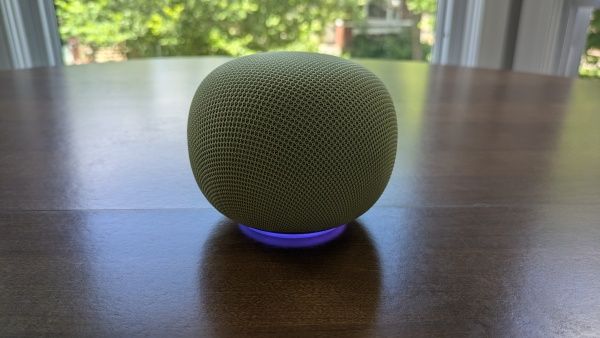
Measuring 4.2 inches in diameter and 3.4 inches tall, the Google Home Speaker abandons the tall, pillow-like shape of the Nest Audio. Instead, it adopts a low-profile, spherical design reminiscent of a softball.
                    [Google Home Speaker Internal Stack]

                           ╭─────────────────╮
                           │ 3D-Knit Fabric  │  ◄── Seamless Shell
                           ├─────────────────┤
                           │ Capacitive Layer│  ◄── Hidden LED Guides
                           ├─────────────────┤
                           │  58mm Transducer│  ◄── 360° Audio Cone
                           ├─────────────────┤
                           │ Thread/Wi-Fi SoCs│ ◄── Edge Computing
                           ├─────────────────┤
                           │  Base LED Ring  │  ◄── Processing State
                           ╰─────────────────╯
Premium Sourcing and Visual Aesthetics
The outer shell is wrapped in a seamless, 3D-knitted fabric made from 37% recycled materials, designed to eliminate production fabric waste. Available in four muted tones—Porcelain, Hazel, Charcoal, and Jade—the device blends easily into residential spaces without looking like a stark piece of tech.
The physical interface is highly minimalist. Google chose to hide the volume and playback controls directly beneath the upper fabric layer rather than using a plastic button panel.
Small, white micro-LEDs shine through the fabric to guide your hands: tapping the center manages playback, while the left and right zones adjust the volume. However, because these hidden touch zones are highly sensitive, it can be easy to accidentally change the volume or pause music when picking up or moving the speaker.
System Indicators and Base Infrastructure
The bottom of the speaker features a flat plastic base wrapped in an adjustable LED status ring. This ring provides immediate visual feedback on what the speaker's AI is doing:
-
Solid White: The 3-microphone array is open and actively listening to a command.
-
Cycling Blue and Purple: The Gemini LLM is processing data and generating a response.
-
Solid Orange: The physical mute switch on the back has disconnected the microphones for privacy.
Silicon Stack and Network Protocols
Beneath the fabric shell, the Google Home Speaker features updated connectivity hardware designed to serve as a reliable edge-computing hub for modern homes.
                  [Local Mesh Architecture & Routing]
                                   │
         ┌─────────────────────────┼─────────────────────────┐
         ▼                         ▼                         ▼
   [Wi-Fi 6 Stack]         [Bluetooth 5.4]         [Thread Border Router]
 High-bandwidth cloud     Rapid local device      Low-latency local mesh
 communication.           onboarding.             for Matter peripherals.
Local Network Routing
-
Wi-Fi 6 (802.11ax): Ensures high-speed communication with the cloud, lowering latency when streaming high-resolution audio or processing data through the Gemini network.
-
Bluetooth 5.4: Speeds up local device setup and pairing, allowing you to easily manage accessories directly from your smartphone.
-
Thread Border Router Integration: Acts as a native bridge for Matter-compliant smart home devices. It routes signals locally for low-power accessories like smart light switches, motion sensors, and door locks, removing the need for extra proprietary third-party hubs.
Gemini for Home: Generative AI at the Edge
The most significant upgrade in the Google Home Speaker is the transition from the legacy Google Assistant to Gemini for Home. Traditional voice assistants rely on rigid "if-this-then-that" command logic, meaning a user must state exact device names and phrases for a command to work. Gemini uses a natural language model that interprets intent, handles contextual follow-ups, and easily parses everyday speech imperfections.
                    [Voice Command Engine Comparison]
                                    │
         ┌──────────────────────────┴──────────────────────────┐
         ▼                                                     ▼
 [Legacy Google Assistant]                            [Modern Gemini Core]
 ├── Grammar: Rigid, Exact Pattern Match              ├── Grammar: Flexible, Natural Speech
 ├── Context: Flushes state instantly                 ├── Context: Long-term multi-turn memory
 └── Processing: Disjointed individual steps          └── Processing: Combined multi-intent strings
Conversational Tracking and Error Correction
Gemini's contextual memory allows you to change your mind mid-sentence or correct a command without starting over. For example, if you say:
"Hey Google, turn on the living... I mean the family... I mean the donut lamp."
The model quickly filters out the speech errors, identifies "donut lamp" as the intended target, and turns on the connected light. Because it maintains memory of the conversation, you can follow up minutes later with a simple modifier like "make it dimmer", and the speaker will automatically apply the change to the same lamp.
Multi-Intent Command Processing
Legacy assistants struggle with complex, multi-part instructions unless they are broken up by specific conjunctions. Gemini processes grouped commands smoothly, treating multiple requests as a single, multi-intent instruction:
It also handles varied names intelligently. If your shopping list in Google Keep is officially titled "My Shopping List," the speaker will correctly add items to it even if you call it your "grocery list," mapping your intent to the correct app smoothly.
Subscriptions and Ecosystem Competition
The introduction of the Google Home Speaker brings a structural change to Google's smart home software model, splitting features between a free base tier and a paid monthly plan.
Feature Access and the Premium Paywall
The core smart home tools—such as basic device automation, standard web searches, and routine configuration—remain entirely free. However, advanced software capabilities now require the Google Home Premium Standard ($10/month) subscription:
-
Gemini Live: Unlocks a continuous, real-time conversation mode. You can talk to the speaker naturally on any topic, brainstorm ideas, and interrupt the AI mid-sentence to shift the focus without using the wake word every time.
-
Acoustic Threat Detection: Keeps the microphone array listening for emergency sounds like smoke alarms, carbon monoxide detectors, or shattering glass, sending an instant alert to your phone if something is detected.
-
Automated Routine Generation: Uses the LLM to write complex smart home automations via the app based on simple text descriptions, bypassing manual step-by-step setup.
Comparative Subscription Landscape
| Capability / Tier | Google Home Base Tier | Google Premium ($10/mo) | Amazon Alexa+ Tier ($14.99–$19.99/mo) |
| Contextual Control | Included | Included | Included |
| Natural Language Parsing | Included | Included | Included |
| Real-Time Interruptions | No | Included (Gemini Live) | Included |
| Acoustic Threat Alerts | No | Included | Requires Guard Plus |
While it is disappointing to see features behind a paywall for the first time on a Google speaker, the model remains highly competitive. Amazon’s upgraded Alexa+ engine requires either an active Prime membership ($14.99/month) or a dedicated $19.99/month subscription, giving Google a value advantage for users looking for an advanced, conversational smart assistant.
Acoustic Performance Analysis
Despite its small size, the Google Home Speaker delivers clean, high-quality audio that easily competes with larger legacy hardware like the Nest Audio.
                    [Acoustic Performance Map]
                                │
        ┌───────────────────────┴───────────────────────┐
        ▼                                               ▼
 [Mids and Highs (Optimized)]               [Sub-Bass (Physical Limit)]
 - Sharp instrument separation              - Clean mid-bass presence
 - Crisp vocal reproduction                 - Lacks deep, sub-bass resonance
 - Consistent 360° output                   - No physical distortion at high volume
Transducer Architecture and Soundstage
The speaker features a centralized 58mm full-range driver that pushes sound down into an internal acoustic cone, distributing clear 360-degree audio evenly throughout a room. Vocals, acoustic instruments, and mid-range tones sound crisp and distinct from any listening angle, and the audio remains clean and free of distortion even at high volumes.
Low-Frequency Performance Constraints
While Google states the speaker delivers 2.5 times the bass energy of the smaller Nest Mini, it faces physical limitations with deep low-end frequencies. The compact, 4.2-inch housing cannot move enough air to replicate deep sub-bass notes.
While pop tracks and rock basslines have a clean, punchy mid-bass presence, deep electronic tracks lack heavy low-end rumble. For a fuller home theater setup, you can pair two speakers together in the Google Home app to act as a stereo pair and link them to a Google TV Streamer.
Technical Performance Matrix
| Evaluation Domain | Engineering Strength | System Limitation |
| Voice Processing | Exceptional handling of conversational context and speech corrections. | The microphone array can occasionally miss wake words spoken at low volumes. |
| Smart Home Integration | Integrated Thread border router offers native, low-latency Matter support. | Does not include built-in temperature or presence sensors like the Echo Dot Max. |
| Audio Output | Well-balanced mid-range and clear 360-degree projection. | Lacks deep sub-bass extension due to its small physical size. |
| Value Position | Core conversational features are available without a subscription. | Advanced safety monitoring and conversational fluid modes are locked behind a paywall. |
FAQ
1. What is the Google Home Speaker (2026)?
The Google Home Speaker (2026) is Google’s new compact smart speaker designed to replace the older Nest Audio-era approach with a more AI-driven smart home experience. It marks a major shift in Google’s smart speaker strategy by dropping the Nest branding and integrating Gemini for Home, a large language model-based assistant that goes beyond rigid voice commands and supports more natural, conversational smart home control.
2. How much does the Google Home Speaker (2026) cost?
The Google Home Speaker (2026) launches at $99.99, positioning it as a mid-range smart speaker that is more affordable than premium flagship smart home hubs while still offering a significant upgrade in conversational intelligence and smart home routing capabilities.
3. What makes the Google Home Speaker (2026) different from older Google smart speakers?
The biggest difference is the transition from the older rule-based Google Assistant to Gemini for Home, which enables more natural language understanding, contextual follow-up commands, and multi-intent request handling. Instead of forcing users to memorize exact device names and command structures, the speaker can interpret intent more flexibly and act more like an adaptive smart home companion rather than a simple voice-triggered controller.
4. Does the Google Home Speaker still use Google Assistant?
No, the speaker is built around Gemini for Home rather than the traditional deterministic Google Assistant model. While the familiar “Hey Google” wake phrase may still be part of the experience, the underlying voice engine is now a more advanced generative AI system focused on contextual understanding, conversational memory, and more natural interactions.
5. What is Gemini for Home?
Gemini for Home is Google’s AI-powered voice platform for the Google Home Speaker (2026). It is based on large language model technology and is designed to interpret conversational speech, correct misstatements, remember recent context, and process multiple requests in a single interaction. This makes the smart speaker feel less like a command console and more like a responsive assistant that can understand the intent behind how people naturally talk.
6. Can the Google Home Speaker understand corrections in the middle of a command?
Yes. One of the main advantages of Gemini for Home is that it can handle speech corrections and incomplete phrasing much better than older assistants. For example, if you start naming one room or device and then correct yourself mid-sentence, the speaker can often infer the final intended target without requiring you to start the entire command over again.
7. Does the Google Home Speaker support follow-up commands without repeating the device name?
Yes. Because Gemini maintains short-term conversational context, you can often give a follow-up instruction such as “make it dimmer” after turning on a lamp, and the speaker can apply the change to the same device without needing you to restate the full device name. This makes the experience feel much more natural than legacy voice assistants.
8. Can the Google Home Speaker handle multi-part requests in a single command?
Yes. The speaker is designed to process multi-intent commands, meaning it can handle grouped instructions within a single sentence more effectively than older smart speakers. For example, it can interpret several shopping list additions or connected actions in one spoken request rather than forcing you to split each action into separate commands.
9. What does the Google Home Speaker look like?
The Google Home Speaker adopts a low-profile spherical design that is much smaller and more rounded than the old Nest Audio. Instead of a tall, pillow-like speaker body, it resembles a compact softball-sized speaker, designed to blend more naturally into living spaces while maintaining a modern minimalist appearance.
10. What are the dimensions of the Google Home Speaker?
The speaker measures approximately 4.2 inches in diameter and 3.4 inches tall, making it compact enough for bedside tables, kitchen counters, bookshelves, office desks, and other small household surfaces without dominating the room visually.
11. What colors is the Google Home Speaker available in?
The speaker is available in four muted finishes:
- Porcelain
- Hazel
- Charcoal
- Jade
These color options are intended to help the speaker blend into a wide variety of interior styles without looking overly industrial or visually intrusive.
12. What materials are used in the speaker’s exterior?
The outer shell is wrapped in a seamless 3D-knitted fabric made from 37% recycled materials. This design emphasizes a softer, more furniture-friendly aesthetic while also reducing fabric waste during production. The fabric covering is part of Google’s attempt to make the speaker feel less like exposed tech hardware and more like a subtle home object.
13. Does the Google Home Speaker have physical buttons?
The design is intentionally minimalist, so there is no prominent traditional button panel on top. Instead, playback and volume controls are hidden beneath the upper fabric layer as capacitive touch controls. This creates a cleaner appearance, but it also means the controls are more subtle and can be triggered accidentally if you pick up or reposition the speaker carelessly.
14. How do the touch controls work?
The top of the speaker includes hidden touch zones under the fabric. Tapping the center controls playback, while the left and right zones adjust volume. Small white micro-LEDs shine through the fabric to help guide your hand placement and indicate where these touch areas are located.
15. Are the touch controls reliable?
They are functional, but one of the practical complaints is that the touch zones can be overly sensitive. Because the controls are hidden beneath the fabric rather than separated into obvious buttons, it is easier to accidentally pause music or change the volume when moving the speaker.
16. What does the LED ring on the base do?
The base of the speaker features an LED status ring that provides visual feedback about the speaker’s state. This makes it easier to understand what the device is doing without needing to rely entirely on audio prompts.
17. What do the LED colors mean on the Google Home Speaker?
According to the provided overview:
- Solid White = microphones are active and listening
- Cycling Blue and Purple = Gemini is processing a request and generating a response
- Solid Orange = the microphone mute switch is active and the microphones are disconnected for privacy
18. Does the Google Home Speaker have a microphone mute switch?
Yes. There is a physical mute switch on the back of the speaker. When activated, it disconnects the microphones and triggers the orange status indicator. This provides a hardware-level privacy control for users who do not want the speaker actively listening for voice commands at all times.
19. How many microphones does the Google Home Speaker use?
The speaker uses a 3-microphone array for voice capture. This setup is intended to support wake-word detection and voice commands in normal household environments, though the review notes that the microphones can occasionally miss wake words spoken very softly.
20. Does the Google Home Speaker work as a smart home hub?
Yes. One of its most important hardware roles is functioning as a local smart home routing hub, particularly for modern Matter and Thread devices. It is designed not just to play audio and answer questions, but also to sit at the center of a smart home network and help connect and coordinate compatible devices more efficiently.
21. Does it support Matter and Thread?
Yes. The Google Home Speaker includes Thread Border Router integration, which allows it to act as a native bridge for Matter-compatible smart home devices. This is important for newer low-power accessories such as smart locks, motion sensors, switches, and other connected home devices that benefit from low-latency local networking.
22. Why is Thread Border Router support important?
Thread Border Router support matters because it allows compatible smart home devices to communicate more efficiently over a local mesh network rather than depending entirely on cloud routing or proprietary third-party hubs. In practical terms, it can improve reliability, reduce latency, simplify setup, and help unify smart home products from different brands under the Matter ecosystem.
23. What wireless standards does the Google Home Speaker support?
The speaker includes:
- Wi-Fi 6 (802.11ax) for cloud communication and streaming
- Bluetooth 5.4 for local pairing and onboarding
- Thread Border Router support for Matter smart home devices
Together, these standards allow it to function as both a connected speaker and a local smart home coordination point.
24. Why does Wi-Fi 6 matter on a smart speaker?
Wi-Fi 6 provides improved bandwidth efficiency, stronger performance in device-dense households, and lower latency for tasks such as music streaming, cloud communication, and AI-driven smart home interactions. In a modern home with many connected devices, Wi-Fi 6 helps keep the speaker more responsive and stable.
25. What is Bluetooth 5.4 used for on the Google Home Speaker?
Bluetooth 5.4 primarily helps with local device setup, onboarding, and direct pairing scenarios. It makes it easier to connect certain accessories or initialize devices from a smartphone without relying solely on the broader Wi-Fi-based smart home stack.
26. Is the Google Home Speaker mainly a speaker, or is it more of an AI home controller?
It is designed to be both, but the product’s main identity is clearly shifting toward ambient AI and smart home intelligence rather than just audio playback. The hardware is compact, but the core selling point is that it combines music playback, smart home routing, contextual voice interaction, and Gemini-powered conversational control in one device.
27. How good is the audio quality?
For a speaker of its size, the audio performance is described as impressively strong. It delivers clear mids, crisp vocals, solid instrument separation, and consistent 360-degree room-filling sound. It is especially good at speech, podcasts, acoustic tracks, and vocal-forward music, where clarity matters more than heavy bass impact.
28. What kind of speaker driver does it use?
The Google Home Speaker uses a 58mm full-range driver that fires into an internal acoustic cone to distribute sound in a 360-degree pattern. This design helps create even room coverage rather than directing sound narrowly in a single forward-facing direction.
29. Does the Google Home Speaker have strong bass?
It has clean mid-bass, but it does not deliver deep sub-bass like a much larger speaker or dedicated subwoofer setup. Pop, rock, and everyday streaming audio should sound punchy enough, but users who want rumbling low-end performance for bass-heavy electronic music or cinematic playback may find the low-frequency extension limited by the speaker’s compact size.
30. Why is the bass limited?
The main limitation is physical size. A small 4.2-inch spherical housing simply cannot move enough air to produce the same deep low-frequency rumble as a larger speaker cabinet. Google may have improved bass performance compared with smaller older models, but the laws of speaker physics still apply.
31. Is the audio distorted at high volume?
According to the provided review, the speaker maintains clean playback at high volumes without obvious distortion, which is a strong point for a compact smart speaker. Its strength lies more in balance and clarity than in sheer bass force.
32. Can you pair two Google Home Speakers together?
Yes. The speaker can be paired with another unit in the Google Home app to create a stereo pair, which can significantly improve the listening experience by widening the soundstage and adding more room-filling output. This is especially useful for larger rooms or for users who want a more immersive music setup.
33. Can it work with Google TV devices?
Yes. The review notes that you can link paired speakers with a Google TV Streamer, allowing them to function as part of a broader entertainment setup. This can help create a more integrated Google-based media environment for TV viewing and streaming.
34. Does the Google Home Speaker require a subscription?
No, not for the basic experience. Core smart home features, standard voice interactions, routine setup, and general smart device control remain available without a monthly fee. However, Google now offers a paid tier for certain advanced AI and safety features.
35. What is Google Home Premium Standard?
Google Home Premium Standard is the $10/month subscription tier associated with the new Google Home Speaker ecosystem. It unlocks a set of advanced features that go beyond basic smart speaker functionality, especially in the areas of continuous conversation, safety monitoring, and AI-assisted automation creation.
36. Which features are included for free?
According to the provided breakdown, the free base tier includes:
- Basic smart home device control
- Standard automations and routines
- Standard web search functions
- Core contextual control and natural language parsing
This means the speaker still offers meaningful AI-powered smart home value even without the premium plan.
37. Which features require the $10/month Google Premium plan?
The paid tier includes advanced features such as:
- Gemini Live for continuous, real-time conversations
- Acoustic Threat Detection for smoke alarm, carbon monoxide alarm, or breaking glass alerts
- Automated Routine Generation using natural language prompts in the app
These features push the device closer to a premium smart home assistant and safety monitor rather than just a voice speaker.
38. What is Gemini Live?
Gemini Live is an upgraded conversational mode that allows for more fluid, back-and-forth interaction with the speaker. Instead of issuing isolated one-shot commands, you can maintain a more natural ongoing conversation, interrupt the assistant, shift topics, and continue interacting without constantly repeating the wake phrase.
39. What is Acoustic Threat Detection?
Acoustic Threat Detection is a premium feature that keeps the microphone system listening for specific emergency-related sounds such as:
- Smoke alarms
- Carbon monoxide alarms
- Shattering glass
If one of these sounds is detected, the system can send an alert to your phone, making the speaker function as a basic passive home monitoring tool in addition to being a smart assistant.
40. What is Automated Routine Generation?
Automated Routine Generation uses the Gemini-based AI system to build smart home routines from simple natural language descriptions. Instead of manually configuring each trigger and action step-by-step, you can describe the behavior you want in plain language and let the system translate it into an automation workflow.
41. Is the premium subscription worth it?
That depends on how much you value continuous conversational AI and home monitoring. If you only want music playback, standard smart home controls, timers, alarms, and basic contextual voice interaction, the free tier may be enough. If you want the speaker to behave more like a live AI assistant and passive home safety monitor, the premium plan becomes much more attractive.
42. How does the Google Home Speaker compare with Amazon Alexa+ on pricing?
Based on the information provided, Google’s premium model is more affordable than Amazon’s higher-end Alexa+ subscription path. Google’s advanced tier is listed at $10/month, while Amazon’s Alexa+ ecosystem can require either a Prime membership or a higher standalone subscription cost. This gives Google a pricing advantage for users specifically interested in advanced conversational smart home AI.
43. Does the Google Home Speaker have built-in environmental sensors like some Echo devices?
No. One limitation mentioned in the review is that it does not include built-in temperature or presence sensors like some competing smart speakers, such as certain Amazon Echo models. So while it is strong as a Matter/Thread smart home router and AI assistant, it is not as sensor-heavy as some rivals.
44. Are there any weaknesses in the voice system?
The main voice-related weakness mentioned is that the microphone array can occasionally miss wake words spoken at low volume. In a normal environment with typical speaking volume this may not be a major issue, but it is worth noting if you expect whisper-level responsiveness across a room.
45. Who is the Google Home Speaker best suited for?
The Google Home Speaker (2026) is best suited for:
- Users invested in the Google Home ecosystem
- Smart home owners planning to adopt Matter and Thread devices
- People who want more natural voice control rather than rigid command syntax
- Users interested in conversational AI for daily household interactions
- Buyers who want a compact speaker that doubles as a modern smart home hub
46. Is it a good upgrade from older Nest Audio or Nest Mini devices?
For users who care about smarter voice interaction and smart home coordination, yes. The biggest reason to upgrade is not just sound or design, but the move to Gemini-powered contextual control, improved smart home networking support, and a more modern platform direction. If your current speaker already handles music and basic commands well, the upgrade decision will mainly come down to whether you want the newer AI capabilities and Matter/Thread hub benefits.
47. What are the biggest strengths of the Google Home Speaker (2026)?
Its biggest strengths are:
- Gemini-powered conversational intelligence
- Better handling of follow-up requests and speech corrections
- Built-in Matter and Thread smart home hub support
- Clean, balanced 360-degree sound
- Compact design with a soft home-friendly aesthetic
- Competitive base price and lower premium subscription cost than some rivals
48. What are the biggest drawbacks of the Google Home Speaker (2026)?
The main drawbacks mentioned are:
- Some advanced features are locked behind a monthly subscription
- The touch controls can be overly sensitive
- Bass depth is limited by the compact enclosure
- It lacks built-in environmental sensors found on some competitors
- Wake word pickup at very low volume can occasionally be inconsistent
49. Is the Google Home Speaker (2026) more of an evolution or a reset for Google’s smart home lineup?
It feels closer to a reset than a simple incremental refresh. Rather than just refreshing audio hardware, Google is repositioning the smart speaker as an ambient AI node for the home. The product is no longer just a fabric-covered speaker with voice commands; it is meant to be a local smart home router, conversational assistant, and gateway into Google’s Gemini-powered home ecosystem.
50. Is the Google Home Speaker (2026) worth buying?
If you want a compact smart speaker that combines modern AI conversation, Matter-ready smart home control, and solid everyday audio for $99.99, it makes a strong case for itself. It is especially appealing for users already in Google’s ecosystem or those looking for a more natural voice assistant experience than older smart speakers can provide. The main thing to consider is whether the premium-only features matter enough to justify the additional monthly subscription.